On 4 December South Africa experienced one of its worst energy crises when Stage 6 loadshedding was rolled out across multiple regions. This serious level of power cuts caused major disruptions to everyday life and exposed the continuing problems in the country’s energy sector. Residents & businesses rushed to adjust to the situation while the most affected areas dealt with substantial difficulties. Understanding the full impact of this loadshedding event became essential. The regions that suffered the most from these power outages revealed how communities were managing the crisis and what it indicated about the future of power management in South Africa.
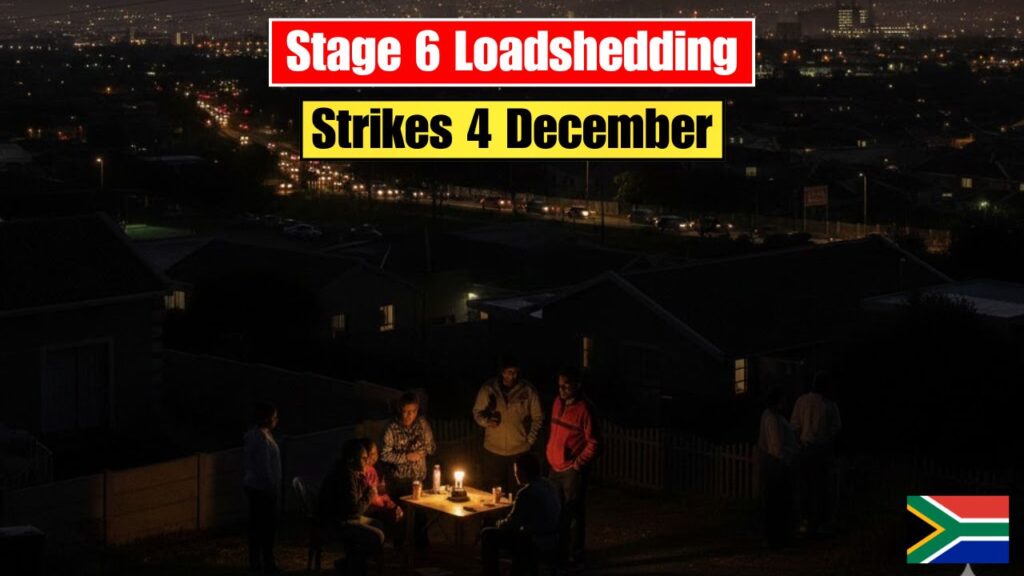
South Africa’s Stage 6 Loadshedding Explained for 4 December
South Africans are familiar with loadshedding but Stage 6 represents a serious escalation that deserves attention. This stage means power cuts can last up to six hours each day and affect homes and businesses alike. The main reason for implementing Stage 6 is to stop the entire electricity grid from failing when demand exceeds supply or generation capacity falls short. Stage 6 loadshedding means electricity gets rationed much more strictly than at lower stages. The result is that outages happen more often & last considerably longer. Power cuts become more frequent throughout the day. Each blackout period extends for longer stretches. Businesses face major disruptions to their operations. Households struggle to maintain their daily routines. Emergency services find it harder to function properly. The broader economy starts to slow down. Keeping life running normally becomes increasingly difficult. The effects of Stage 6 touch every part of society. Commercial operations lose productive hours and revenue. Families cannot rely on basic electrical services. Traffic systems may fail without backup power. Hospitals and clinics need generators to continue patient care. Schools face interruptions to learning schedules. Food spoilage increases in homes and stores.

– Communication networks become less reliable. Water supply systems that depend on electric pumps may fail.
– Understanding Stage 6 helps people and organizations prepare better.
 SA Salary Tax Change for 2025: Workers Could Save Up to R4,500 — Update Before 15 December
– Knowing that outages will be longer and more frequent allows for planning.
– Businesses can invest in alternative power sources.
– Households can stock up on essentials & adjust schedules.
-Communities can work together to support vulnerable members during blackouts.
Most Affected Areas: Updated List of Locations Facing Severe Outages
The loadshedding on 4 December impacted many regions throughout South Africa. Some areas faced worse disruptions than others. The most affected locations included major cities and industrial areas where electricity demand is usually high. These places experienced longer power outages that interrupted daily life and business activities. People were asked to conserve electricity & get ready for possible blackouts. Meanwhile businesses needed to figure out how to reduce the effects on their operations.
| Region | Outage Duration | Impact on Residents | Impact on Businesses | Notes |
|---|---|---|---|---|
| Johannesburg | 6 hours | High | Critical | Traffic disruptions |
| Cape Town | 5 hours | Moderate | High | Public transport affected |
| Durban | 4 hours | Moderate | Moderate | Water supply issues |
| Pretoria | 5 hours | High | High | Communication interruptions |
| Port Elizabeth | 3 hours | Low | Moderate | Minimal disruptions |
| Bloemfontein | 4 hours | Moderate | Moderate | School closures |
| Polokwane | 3 hours | Low | Low | Normal operations |
| Nelspruit | 6 hours | High | Critical | Healthcare services affected |
How Households Can Cope with Intensified Loadshedding Waves
As loadshedding becomes more common in South Africa, people have learned to adjust their daily lives around power cuts. Families and businesses are finding practical solutions to cope with the ongoing electricity problems. Many South African households now rely on solar panels to generate their own electricity during outages. Backup generators have also become popular for keeping essential appliances running when the power goes out. These investments help families maintain some normalcy despite the unpredictable power supply. Businesses face different challenges and need solutions that keep their operations running smoothly. Companies are purchasing uninterrupted power supply systems to protect their equipment and maintain productivity during outages. Some businesses have changed their operating hours to work around scheduled loadshedding times. Communities are also working together to find shared energy solutions. Neighbors pool resources to install larger backup systems that benefit multiple households. This cooperative approach makes alternative power more affordable and accessible for everyone. The situation has forced South Africans to become more resourceful & self-reliant. While loadshedding creates significant disruptions people continue adapting through technology and community support.
– Solar installations are increasing across the country as more households seek long-term solutions.
– Generators provide immediate backup power when needed most.
– These changes represent a major shift in how South Africans manage their energy needs.
The resilience shown by communities demonstrates their determination to overcome infrastructure challenges and maintain their quality of life despite ongoing power supply issues.
Government Actions and Emergency Plans to Stabilise Power Supply
The South African government has an important responsibility in controlling the nation’s electricity supply & dealing with the current energy problems. The government is working to make the power grid more stable by increasing how much electricity can be produced and making the infrastructure better while also encouraging people to use energy more wisely. However there are still problems because many power plants are old and have not been properly maintained which slows down improvements. The government is now looking at working together with private companies to bring more money into the energy industry.
– The main goals include making power plants produce more electricity and fixing the country’s electrical infrastructure.
– The government also wants people and businesses to use less energy and find ways to deal with power plants that are too old.
– Another priority is getting private businesses involved in the energy sector & looking into options for renewable energy sources.
Local Community Response: Grassroots Solutions to Ongoing Blackouts
Communities throughout South Africa have stopped waiting for government intervention and started addressing loadshedding challenges themselves. Local groups are launching energy conservation programs and renewable energy projects that contribute to long-term sustainability. Residents are working alongside businesses & non-governmental organizations to decrease their dependence on the national power grid. These grassroots movements include several practical approaches. Local energy conservation initiatives help households reduce their electricity consumption through simple behavioral changes. Community renewable energy projects allow neighborhoods to generate their own power using alternative sources. Partnerships with NGOs bring technical expertise and funding to support these ventures.
– Educational programs teach residents about energy efficiency and how to minimize waste in their daily routines.
– Collaborative efforts bring together different stakeholders to develop sustainable solutions that work for entire communities.
– Some areas have established local energy cooperatives where members pool resources to invest in shared infrastructure.
– Investment in community solar farms represents another growing trend.
– These facilities allow multiple households to benefit from solar power without requiring individual rooftop installations.
The collective approach makes renewable energy more accessible and affordable for ordinary citizens who might otherwise struggle with the upfront costs of going solar.
Modern Energy Tech: Innovations Helping Reduce Loadshedding Impact
Technology is helping South Africa solve its energy problems. New developments in smart grids and energy storage systems are making power management more efficient. These tools help distribute electricity better and reduce pressure on the national grid. Smart meters and home energy systems let people track & manage how much power they use. Renewable energy sources are also becoming more important. Solar panels and wind turbines offer alternatives to traditional power plants. These options are becoming cheaper and more accessible to both businesses and homeowners. Battery storage technology has improved significantly & now allows excess energy to be saved for later use during peak demand times.
 South Africa Introduces R1,200 Housing Support for Low-Income Families — Deadline 15 December
| Technology | Updated Function | Updated Benefits | Updated Challenges |
|---|---|---|---|
| Smart Grid | Real-time energy flow optimization | Higher stability & reduced outages | High setup and upgrade expenses |
| Energy Storage | Long-duration backup energy retention | Better grid balance & emergency support | Battery lifespan and replacement cost |
| Renewable Energy | Continuous clean power generation | Lower carbon footprint & sustainability | Weather dependency and site limitations |
| Smart Meters | Automated usage tracking and billing | Better energy awareness for consumers | Cybersecurity and data protection issues |
| Home Energy Systems | AI-based household energy management | Significant monthly savings | High installation and integration complexity |
| Advanced Power Plants | Next-gen efficient energy conversion | Lower emissions & higher productivity | Expensive maintenance and skilled workforce |
| Grid Automation | Fully automated supply monitoring | Improved reliability & quick fault response | Requires advanced technical expertise |