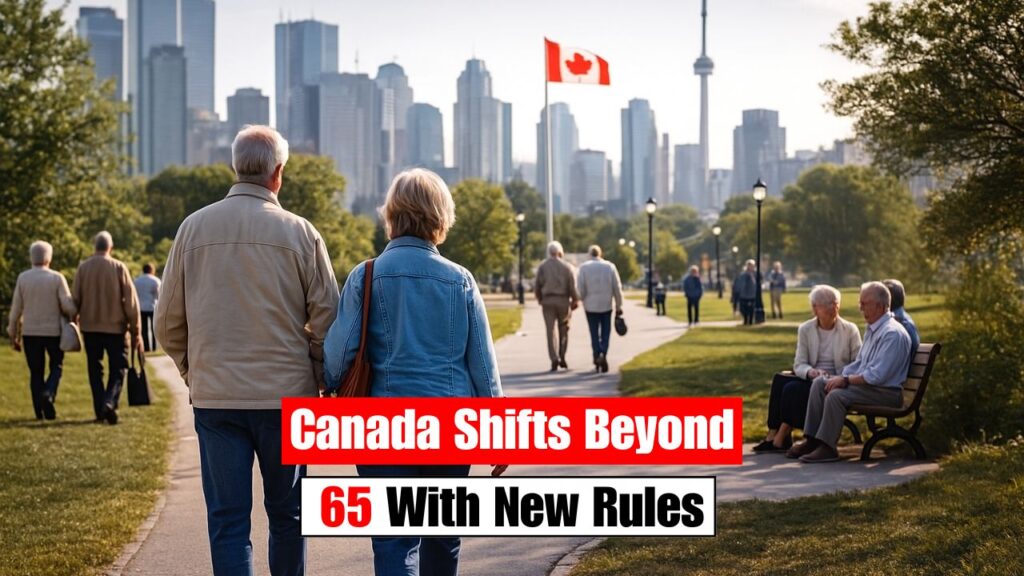
Canada is changing how retirement works in the country. Starting on December 10 2025, the traditional retirement age of 65 will no longer be the standard requirement. Canadians will now have complete freedom to decide when they want to retire based on their money situation, health status, and personal preferences. This major change affects how the Canada Pension Plan and Old Age Security benefits are calculated and paid out. The new system creates a more flexible and individualized approach to retirement planning. The government designed this reform to recognize that people have different needs and circumstances. Some Canadians may want to retire earlier while others prefer to keep working past 65. The updated framework allows workers to make retirement decisions that suit their unique situations without being locked into a specific age requirement. This represents a significant departure from the previous system where 65 was considered the normal retirement age for most benefit calculations. Under the new rules, Canadians can adjust their retirement timeline according to what works best for them. The changes to CPP and OAS mean that benefit amounts will vary depending on when someone chooses to start receiving payments. This shift gives people more control over their retirement income & timing. The reform acknowledges that modern workers have diverse career paths and financial goals that don’t always align with a fixed retirement age.
Canada’s 2025 Retirement Reform Unveiled
Canada’s new retirement reform recognizes that today’s Canadians are enjoying longer lifespans, better health, and a wider range of lifestyle choices than previous generations. Instead of relying on a single retirement path, the government aims to introduce a system that adapts to each individual’s circumstances, goals, and financial needs. This modernized model focuses on flexibility, personal preference, and long-term security for all retired Canadians.

| Factor | Before December 2025 | After December 2025 |
|---|---|---|
| Retirement Age | Standard retirement fixed at 65 | Flexible retirement age based on personal choice |
| CPP Benefits | Benefits begin only at 65 | Start age can be adjusted earlier or later for different payout levels |
| OAS Eligibility | Eligibility starts at 65 | Option to defer for increased monthly payments |
| Work After 65 | Limited incentives for continuing employment | Enhanced rewards for Canadians who choose to work longer |
| Policy Goal | One-size-fits-all retirement framework | Personalized and flexible retirement planning system |
Canada Scraps Traditional Retirement Age
For decades turning 65 marked the standard retirement age in Canada. Starting December 10 2025 that idea will shift dramatically. Canadians will now choose when they retire based on their finances job status & health rather than following a fixed age. People who retire early will still get their CPP and OAS benefits but the monthly payments will be smaller. Those who keep working longer can postpone their benefits and collect larger amounts afterward. This system lets people take charge of their retirement income and plan according to their own goals.
CPP and OAS Benefits Get Major Overhaul
The latest reform brings major changes to how benefits under the Canada Pension Plan (CPP) and
Old Age Security (OAS) are calculated and distributed. Until now, both programs generally started
paying benefits at age 65. Under the updated rules, Canadians now have the flexibility to begin receiving their
payments earlier or defer them for higher monthly amounts. This shift offers greater control over retirement planning
and allows individuals to make choices based on their financial goals and career timeline.
 SA Salary Tax Change for 2025: Workers Could Save Up to R4,500 — Update Before 15 December
One of the most impactful updates is the increased advantage for Canadians who wish to continue working past age 65.
Every additional year of employment can now contribute to higher lifetime income and increased pension payouts.
The reform encourages longer participation in the workforce while ensuring that retirement benefits remain fair,
adaptable, and personalized.
| Aspect | Old System | New System |
|---|---|---|
| CPP Payment Start | Standard at 65 | Flexible — start earlier or delay for higher payouts |
| OAS Start Age | Fixed at 65 | Deferral option available for increased benefits |
| Work After 65 | Limited benefit incentives | Enhanced income rewards for working longer |
| Benefit Calculation | Based on fixed retirement age | Calculated according to chosen retirement timing |
Overall, the modernization of CPP and OAS offers Canadians more freedom in shaping their retirement path.
Those who continue working beyond 65 can now enjoy larger pension amounts, improved financial security,
and greater long-term stability.
What This Means for Retiring Canadians
The new policy helps more Canadians who want flexible work schedules or a gradual transition into retirement. Workers in fields like education & healthcare & business can keep working without facing penalties that affect their pension benefits. People who decide to retire early because of health issues or personal reasons can still receive their CPP and OAS payments but the monthly amounts will be lower. The reform gives people more control over their choices and makes sure retirement fits their financial situation and personal preferences.
– The main benefits of this reform are more flexibility when planning retirement & greater personal control over
– financial decisions that match individual goals.
Why the Federal Government Made This Shift
The Canadian government decided to eliminate the fixed retirement age because of significant changes in population patterns & economic conditions. People now live longer and stay physically capable well into their late 60s and 70s. The old retirement system no longer matches how people actually live today. This policy change has several goals.
– It helps ensure that public pension programs remain financially viable for younger generations who will retire in the future.
– It allows older Canadians who want to continue working the freedom to do so.
– It reduces the financial strain on federal pension funds.
– It also acknowledges that Canadians are living longer and have more varied financial situations when they retire.
By updating its retirement policies Canada follows the example of other developed nations like the UK and Australia that have already adopted more flexible retirement systems.
New Provisions for Canadians with Disabilities
The federal government plans to send a one-time payment of $150 to low-income individuals with disabilities as part of the 2025 reform under the Canada Disability Benefit. This money is meant to help cover extra costs related to healthcare and daily living expenses. After the legislation is approved the payment will be sent automatically to those who qualify through the government’s registered payment systems. People can find complete information about eligibility requirements and how to register on the official Government of Canada website.
The Future of Retirement in Canada Begins Now
Starting on December 10 2025, Canada will eliminate the traditional fixed retirement age. Workers will be able to decide for themselves when they want to retire based on what works best for their own situation instead of following a standard age set by the government. The goal of this change is to help ensure the Canada Pension Plan and Old Age Security programs remain financially stable over the long term while also allowing people more control over their retirement decisions.
– This new system will give Canadians more flexibility when choosing their retirement date.
– It will also help people maintain better control over their finances and make it easier to plan around personal needs and family responsibilities.
– The traditional idea of retiring at age 65 will gradually disappear as this new approach takes effect.
Instead of following a one-size-fits-all timeline, Canadians will have the freedom to create retirement plans that match their individual circumstances & financial goals.