South Africa is preparing for a major shift in its road safety framework as the new Driving Demerit Rules officially begin in January 2026. These reforms aim to reduce dangerous driving behaviour and create a more accountable system for motorists nationwide. With stricter penalties and clearer enforcement policies, drivers are encouraged to stay updated to avoid costly mistakes. The new structure introduces tougher point deductions, faster suspensions, and financial consequences that could significantly affect everyday driving across the country.
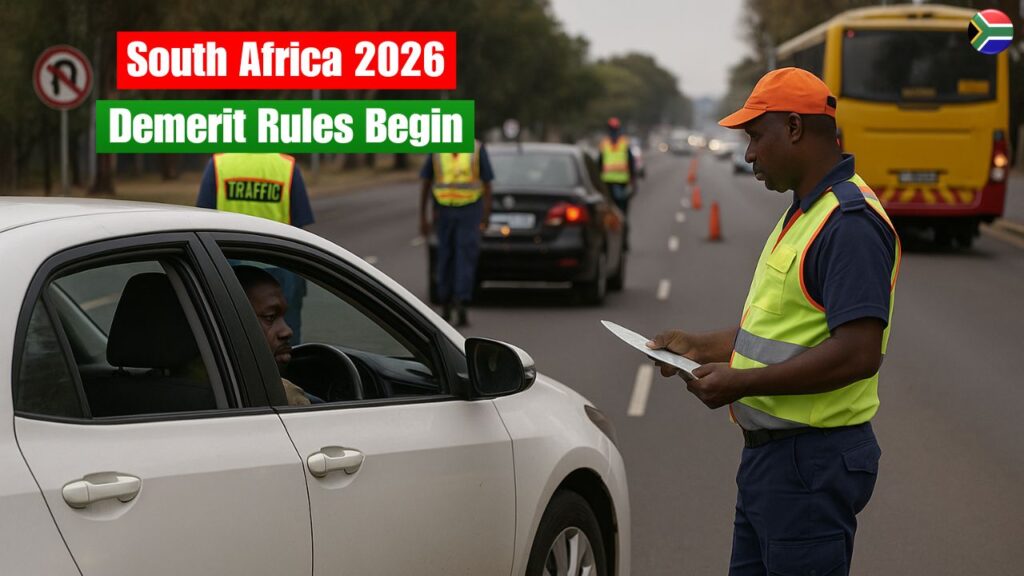
Understanding the New Driving Demerit Rules in South Africa
The updated demerit rules in South Africa introduce a structured way to penalize motorists who repeatedly violate traffic laws. Drivers will now face harsher consequences for offences such as speeding, distracted driving, and signal violations. Under this system, points accumulate quickly, making it essential to practice safer habits. These changes aim to promote better road awareness, encourage responsible daily driving, reduce dangerous behaviour, improve public road safety, and create consistent enforcement rules. Motorists who ignore the new regulations risk rapid licence suspension and costly financial penalties.

Heavy Fines and Penalties Under the 2026 Demerit System
The new framework introduces heavy fines that can reach up to R3,000 for certain violations, making it one of the strongest enforcement policies in recent years. These fines are designed to discourage risky actions while ensuring that offenders take accountability for their behaviour. With stricter monitoring and easier tracking of offences, drivers must remain aware of how each violation affects them. The updated system highlights serious offence costs, outlines increased penalty amounts, warns of quicker licence action, emphasizes financial risk awareness, and encourages safer community roads for all South Africans.
How Motorists Can Prepare for South Africa’s 2026 Demerit Changes
Preparing for the new rules requires motorists to stay informed and adopt safer driving habits before the changes take effect. Understanding the offences that attract points, the fine structure, and the suspension thresholds will help drivers avoid stress and unexpected penalties. Motorists should also ensure all licence details are updated to prevent administrative complications. These adjustments help promote early rule awareness, encourage proper document updates, support safe driving habits, reduce avoidable licence issues, and foster smooth system transition as the country introduces the demerit reforms.
 SA Salary Tax Change for 2025: Workers Could Save Up to R4,500 — Update Before 15 December
Summary of the 2026 Driving Demerit Reform
The 2026 demerit system marks a major step toward enhancing road safety and reducing law violations across South Africa. Through its updated penalties, structured point allocation, and clear enforcement approach, the government hopes to promote more disciplined driving habits nationwide. The system prioritizes improved traffic discipline, focuses on reduced road accidents, encourages better driver behaviour, supports transparent penalty rules, and strengthens nationwide safety goals. Motorists who adapt early will benefit from smoother compliance and fewer disruptions as the regulations take effect.
| Offence Type | Demerit Points | Possible Fine |
|---|---|---|
| Speeding (Moderate) | 2 Points | Up to R1,000 |
| Using Phone While Driving | 3 Points | Up to R1,500 |
| Skipping a Red Light | 3 Points | Up to R2,000 |
| Reckless or Dangerous Driving | 4 Points | Up to R3,000 |
Frequently Asked Questions (FAQs)
1. When do the new demerit rules start?
The rules officially begin in January 2026.
2. What is the maximum fine under the new system?
The highest fine can reach up to R3,000.
3. Can a licence be suspended under the new rules?
Yes, accumulating too many points can lead to suspension.
4. Do all violations add demerit points?
Only listed traffic offences contribute to point accumulation.