The South African Social Security Agency (SASSA) has introduced a significant change to the country’s social support system with its new One-Grant-Per-Household Policy starting on 15 July 2025. This policy impacts multiple types of social grants and particularly affects the Social Relief of Distress (SRD) R370 grant. The announcement has triggered widespread debate across the nation regarding fairness and eligibility criteria as well as the potential economic consequences. The new policy represents a fundamental transformation in how social assistance is distributed to South African households. Under this system only one grant will be allocated per household regardless of how many eligible individuals live there. This marks a departure from the previous approach where multiple household members could receive separate grants simultaneously.
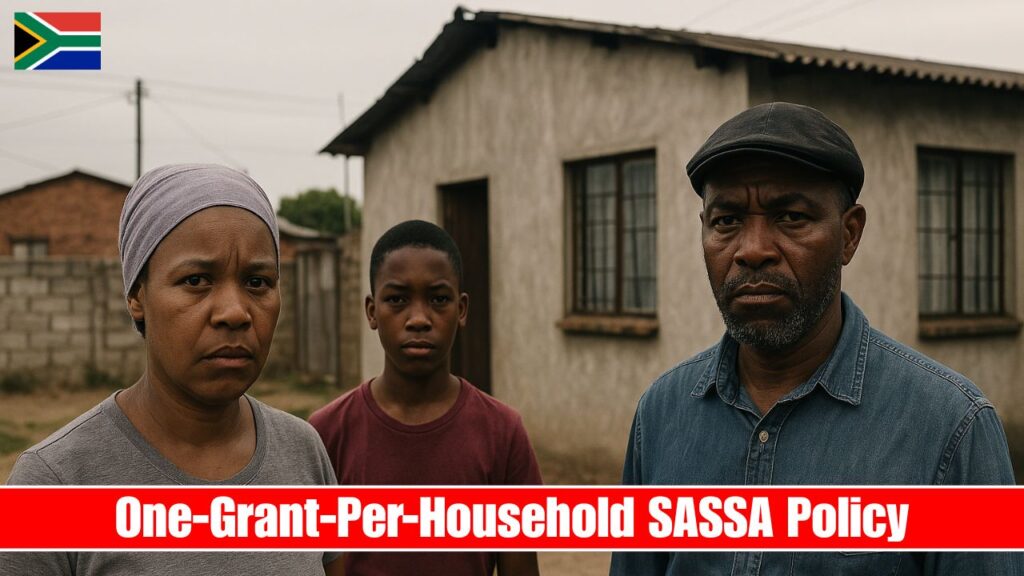
The policy wants to expand government support so that more households can get help instead of giving multiple payments to different people in the same home. The change is designed to make things fairer but it also means many families might qualify for fewer grants than before.
 Singapore Seniors to Receive Up to $2,000 CPF Top Ups Annually — How the MRSS 2025 Scheme Works
What Does SASSA’s One-Grant-Per-Household Rule Actually Mean?
The government has changed the rules for social grants. Now only one person per household can receive the SRD R370 grant instead of allowing each individual to claim it separately. This new policy means that families where several members were getting the SRD grant will now only have one person who qualifies for the payment.
– Effective From 15 July 2025: New rules officially begin for the SRD R370 grant and all future emergency support programs.
– Applies to SRD R370 & Similar Grants: Every current and upcoming emergency relief grant will follow this updated policy structure.
– Updated Household Definition: Any people living together under one roof and sharing income or daily expenses will now be treated as a single household unit.
– Verified Through Multiple Sources: Household status will be confirmed using linked residential addresses, bank transaction data, and national identity records.
– Goal of the New Rule: To spread financial assistance more fairly and ensure wider resource distribution across more eligible South African households.
The government decided to make this change after discovering that thousands of families were getting two or more SRD payments at the same time. Meanwhile many other people received nothing because the system had problems. This review showed serious issues with how payments were being distributed. Some households benefited from duplicate payments while eligible applicants were left out completely. The system could not properly track who had already received assistance.
Which South African Families Will Lose Extra SASSA Grants?
The main effect will target jobless adults between 18 and 59 years old who share homes with other people getting the SRD R370 grant. SASSA has begun finding households where more than one person is registered by checking their home addresses and phone numbers and bank account information. The agency wants to stop multiple people from the same household from claiming the grant when they live together & share resources. This change means that many families who currently receive several grants will soon get only one payment per household. Officials say this approach makes sense because people living together typically share expenses like rent and food costs. They argue that giving one grant per household instead of one per person better reflects how families actually manage their money.
| Group | Impact Description |
|---|---|
| Multiple SRD recipients in one home | Only one recipient will continue under new rules |
| Shared households (extended families) | Grants may be reduced to one per household |
| Applicants with unverified addresses | May be disqualified until proof is provided |
| Informal dwellings with shared IDs | Higher risk of disqualification |
| Temporary accommodation seekers | May be affected unless household is clarified |
SASSA Urges Beneficiaries to Update Their Information SASSA is asking people who receive grants to update their address and income information as soon as possible. If they don’t do this quickly they might lose their benefits automatically. The agency has made it clear that keeping personal details current is essential for continuing to receive financial support.
How Will SASSA Confirm If You Belong to the Same Household?
SASSA has upgraded its data systems to enforce this policy by detecting household overlaps & duplicate beneficiaries. The agency now uses integrated verification technology that works across different government departments.
| Data Used | Purpose |
|---|---|
| ID numbers and national registry | Track duplicate entries by family |
| Physical address (GPS/location) | Identify common households |
| Utility accounts and lease info | Validate shared residences |
| Banking and cellphone records | Cross-reference income and household ties |
These tools help identify the difference between separate households and situations where people are submitting applications from the same address.
Action Needed Before July 15 – SASSA’s Deadline for Grant Holders
SASSA has announced that beneficiaries must update their personal information before 15 July 2025 to avoid potential delays or cancellations of their grant payments. The agency emphasizes that applicants need to confirm their household status to maintain their eligibility for continued support. This requirement affects all current grant recipients who have not recently verified their details with the agency.
– Update your physical home address on the SASSA SRD portal or by visiting the nearest SASSA branch.
– Upload valid proof of residence such as a municipal letter, utility bill, or signed lease agreement.
– Correctly declare the total number of people living in your household on your SRD application.
– Ensure you do not use duplicate cellphone numbers or bank accounts across multiple SRD applications.
– Regularly check your SRD application status at www.sassa.gov.za for updates or required actions.
SASSA has also introduced a grace period allowing applicants to submit appeals if their grant is discontinued under the new verification policy.
Are There Any Exceptions to This One-Household-One-Grant Rule?
The policy covers most people but some households can get exemptions or special treatment if they can prove they need help.
| Situation | Exemption Type |
|---|---|
| Households with no income at all | May still qualify if proven through affidavit |
| Adults with disabilities living together | May receive separate Disability Grants |
| Boarders or tenants in same dwelling | Considered separate if leases are valid |
| Victims of abuse in shelters or safe homes | May apply individually under protective status |
Every exemption needs individual review with appropriate documentation.
SASSA’s Official Announcement: Why This Household Policy Was Enforced
Starting on July 15 2025, the South African Social Security Agency will introduce a new policy that limits each household to one primary social grant. This policy aims to eliminate duplicate claims and ensure that resources reach those who need them most. Under this new system, only one main social grant will be provided per verified household. However exceptions will be made for households with special needs or disability cases. The policy will primarily impact three types of grants: the R350 Social Relief of Distress grant, the Child Support Grant, and the Unemployment Relief Grant.
Below is the complete table showing the estimated number of affected households & main implementation details for each province.
| Province | Est. Households Affected | Primary Grant Type Restricted | Exception Criteria | Verification Method |
|---|---|---|---|---|
| Eastern Cape | 92,000 | SRD, CSG | Disability, Foster Care | ID & Address Check |
| Free State | 61,500 | SRD, CSG | Older Persons in same household | Home Visit Audit |
| Gauteng | 214,000 | SRD, CSG, Unemployment Grant | Formal proof of separate residency | Utility Bill Verification |
| KwaZulu-Natal | 178,000 | SRD, CSG | Disability or child with medical needs | Clinic Certification |
| Limpopo | 113,000 | CSG, SRD | Elderly & Child under 6 | Census Registry Link |
| Mpumalanga | 76,500 | SRD, CSG | Foster arrangements | Ward Council Verification |
| North West | 68,200 | SRD, CSG | Multiple grant types w/ proof | Proof of income & support |
| Northern Cape | 39,800 | SRD | Rural hardship cases | Social Worker Review |
| Western Cape | 143,000 | SRD, CSG | Disability or special education child | Medical Certificate |
Important Notice for Affected Households Households that are affected will receive notifications through SMS messages & printed payment slips by the middle of July. If you need to dispute your status you must go to a SASSA office before August 15, 2025.
What Happens to Your R370 SRD Grant Under the New SASSA Rule?
The Social Relief of Distress grant started as a temporary solution but still gives essential financial support to millions of jobless South Africans. The updated rules now restrict the SRD grant to just one person per household. This change might remove eligibility for as many as 2 million people who currently receive the grant.
| Grant Name | Amount | Frequency | Affected by One-Grant Rule? |
|---|---|---|---|
| SRD R370 Grant | R370 | Monthly | Yes |
| Child Support Grant | R530 | Monthly | No |
| Old Age Pension | R2,180 | Monthly | No |
| Disability Grant | R2,180 | Monthly | No |
Other grants such as pensions child support and disability grants are not affected by the one-per-household rule.
New One-Grant Policy: What All SASSA Beneficiaries Must Know Immediately
social grant. SASSA created this rule to stop people from claiming multiple grants unfairly. The agency wants to make sure that government money goes to those who truly need it.
| FIELD | DETAILS |
|---|---|
| Policy Effective Date | July 15, 2025 |
| Core Rule | Only one social grant permitted per household (e.g., only one caregiver in a single home) |
| Applicable Grants | All SASSA grants–Older Persons, Disability, Child Support, Foster Care, SRD, Care Dependency |
| Reason for Change | Combat duplicate claims and reduce fraud; improve targeted support |
| Required Household Verification | Beneficiaries must confirm via ID, proof of residence, and household affidavit |
| Non-Compliance Consequence | Duplicate grants paused; households must choose one eligible grant; others suspended |
| Re-Application Process | Households flagged must reapply—submit accurate documentation to determine which grant continues |
| Support Channels | Claims handled through local SASSA offices, paypoint interviews, and call centre verification |
What You Need to Do
– Check your household status — look for a SASSA SMS or visit the nearest paypoint to confirm if you’re flagged.
– Gather all required documents — your ID, proof of residence, and the official household declaration form.
– You or your selected representative must confirm which single grant applies to your household under the new rules.
– Benefit from ongoing support — once your verification is successful, the approved grant will stay active without disruption.
– Notify SASSA of any major changes — such as divorce, death in the household, or the birth of a new child, as these may affect eligibility.
Important Update:
From 15 July, SASSA will enforce the one-grant-per-household rule, tightening verification to reduce fraud. If your household currently receives more than one grant, prepare all documents early to ensure your valid benefits continue smoothly.
Need help choosing the correct grant or preparing your verification paperwork? Just tell me — I’m here to assist!