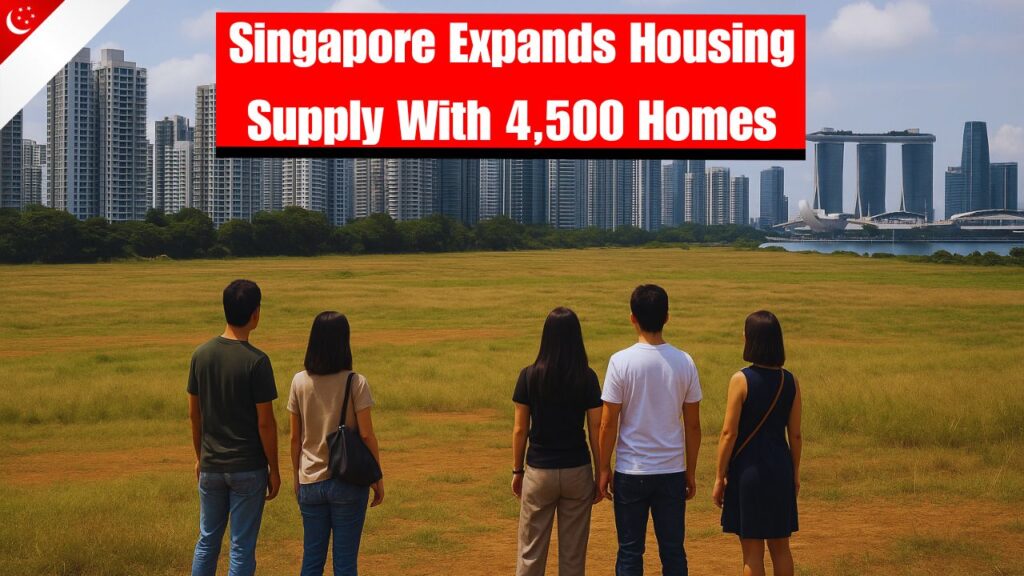
Singapore plans to increase its private housing supply by releasing land for approximately 4500 new private homes during the first half of 2026. This initiative forms part of the government’s broader strategy to promote homeownership and maintain stable property prices while ensuring market balance. The government has also implemented new requirements designed to provide prospective buyers with clearer information about housing developments and enable them to make better-informed purchasing decisions.
Overview of the 2026 Land Release Plan
The land supply planned for the first half of 2026 will enable the development of over 4500 new private residential units. This figure is comparable to what was released during the second half of 2025. When added to existing projects the total pipeline of private homes will surpass 58,000 units. This strategy demonstrates Singapore’s dedication to maintaining a stable and sustainable housing market for its people.

Government’s Approach to Housing Demand
The government has boosted housing availability in both public and private sectors over recent years. From 2025 to 2027 approximately 55,000 Build-to-Order flats will become available which represents an increase from the previous goal of 50,000 units. Within this same timeframe the government will release land suitable for developing over 25000 private residential properties. The housing market has begun to stabilize as evidenced by HDB resale prices which grew by just 0.4 percent during the third quarter of 2025 marking the slowest growth rate observed in five years.
Key Figures at a Glance
| Details | Information |
|---|---|
| Land Release (H1 2026) | 4,500 private residential units |
| Total Homes in Pipeline | 58,000+ private units |
| BTO Launches (2025–2027) | 55,000 flats |
| Private Home Price Growth (2025 Q1–Q3) | About 3 percent |
| HDB Resale Price Growth (Q3 2025) | 0.4 percent |
Updated Rules to Help Home Buyers
New guidelines will start early next year to help buyers understand what they are purchasing. Developers must give clearer and more complete information about new housing projects. This means floor plans need to show structural walls, distribution boards, lifts utility chambers & refuse systems. These updates are designed to prevent confusion between developers & buyers and make sure residents know exactly what the home layout looks like before they decide to buy.
 SASSA Pension Boost R5,000 — Major Lift for Older South Africans Facing Rising Living Costs in 2025
What Buyers Will Now See in Sales Documents
Building Layout and Developer Information
– The unit floor plans show structural walls with clear markings.
– You can see where the lifts are positioned along with utility chambers & distribution boards.
– The plans include information about refuse chutes and ventilation systems.
– Access paths for both vehicles and pedestrians are documented.
– The developer’s past performance is available through their track record and CONQUAS quality ratings.
– The timeline for the defects liability period is kept current with regular updates.
Improvements to Showflat Site Processes
Developers often struggle to find and secure suitable locations when they need to build showflats for their projects. A new government initiative aims to make this process much easier & faster. The Singapore Land Authority will now identify state-owned land parcels that work well for showflat construction & obtain all necessary clearances from relevant agencies in advance. These pre-approved locations will be published on the Singapore Land Authority’s online portal where developers can easily access them. This streamlined approach is expected to reduce the approval timeline by approximately fifty percent compared to the current process.
Future of Singapore’s Housing Landscape
Housing stands as a central element in the Urban Redevelopment Authority’s Draft Master Plan 2025. The completed plan will launch in December & will direct Singapore’s land use for the following 10 to 15 years. The approach centers on developing more inclusive and accessible homes in central locations like Pearl’s Hill and Bukit Timah. These measures seek to address Singapore’s expanding housing requirements while maintaining long-term sustainability.